

How to Choose Long Lasting Apparel That Holds Up
Last Updated: November 19, 2026
Quick Summary
To choose long lasting apparel, verify four things in under two minutes: fabric weight and fiber composition on the care label, dense and finished seams, straight grain lines, and hardware that operates smoothly. Then confirm with the hand test and tug test, and judge the garment rather than the price or brand name.
- Read the fiber composition on the care label before anything else.
- A well-made seam holds without gaping, puckering or daylight through the stitches.
- Fabric recovery is the single most useful thing you can test in a shop.
- Wash less often, wash gently, and dry without heat to extend garment life.
- Cost per wear divides purchase price by the number of times you realistically wear the item.
Table of Contents
- Why Long Lasting Apparel Beats a Wardrobe Full of Replacements
- How to Tell If Clothes Are High Quality: A Repeatable Inspection Checklist
- Durable Clothing Fabrics: Natural, Synthetic and What Recovery Tells You
- Fit, Finishing Details and Shape Retention in Everyday Wear
- How to Care for Clothes to Make Them Last: Washing, Drying and Repair
- Cost Per Wear Clothing: The Maths That Beats the Price Tag
- Durability by Garment Category: Hoodies, Joggers and Tees
- Build a Long Lasting Apparel Wardrobe at Needlework
- Frequently Asked Questions
Why Long Lasting Apparel Beats a Wardrobe Full of Replacements
Long lasting apparel is clothing built, finished and cared for so it keeps its shape, colour and structure through repeated wear and washing.
The trap is that "quality" is easy to claim and hard to verify online.
Durability isn't a single quality. A heavyweight fleece can be tough and still lose its shape; a fine cotton tee can be light and still outlast a thick one.
How to Tell If Clothes Are High Quality: A Repeatable Inspection Checklist
High-quality clothing shows consistent fabric weight, dense and finished seams, straight grain lines, and hardware that operates smoothly. You can verify all four in under two minutes without special tools.
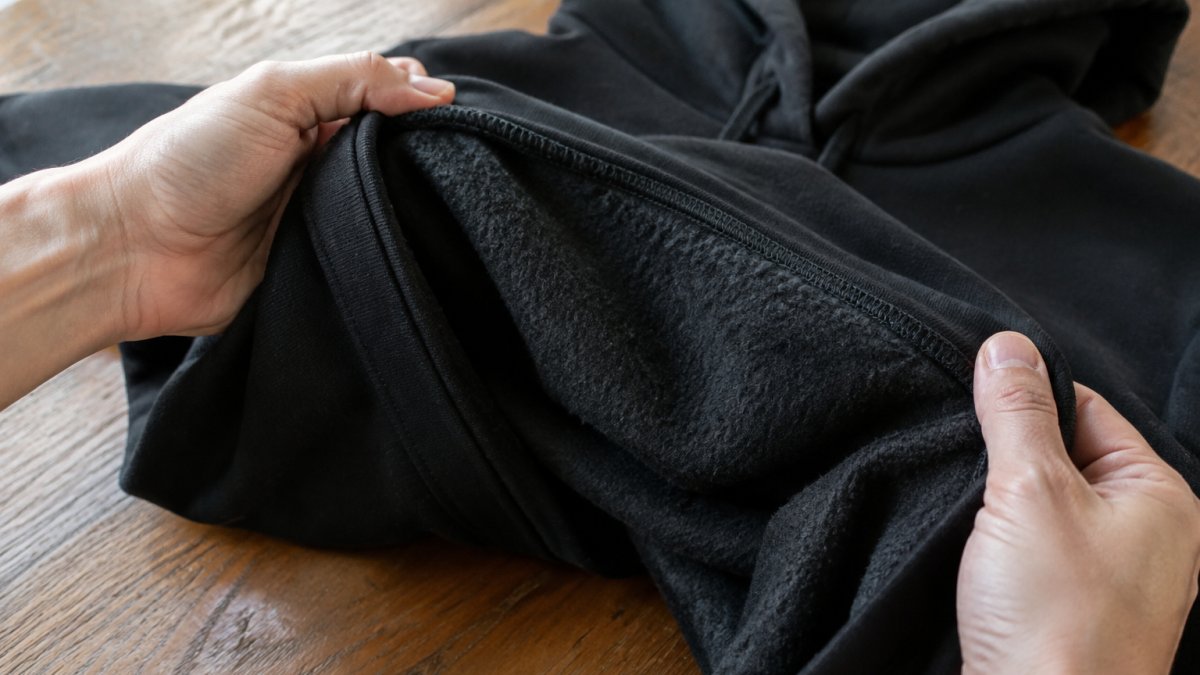
Fabric weight, feel and fiber composition
Start with the care label, then the hand. Fabric weight is the mass of the cloth per unit area, usually given in GSM (grams per square metre); higher numbers mean a denser, heavier cloth. Fiber composition drives how it drapes, washes and ages.
- Read the fiber composition on the care label before anything else
- Check the stated fabric weight if the brand publishes it
- Squeeze the cloth in your fist and release; note how it springs back
A common mistake is judging softness as quality. Very soft, loosely knit cloth often feels wonderful in the shop and bags out within weeks.
Seam strength, stitch density and the tug test
Turn the garment inside out. Are raw edges overlocked or bound, or left to fray? Count stitches along an inch of seam; denser, even stitching generally signals a stronger join.
Then run the tug test. Grip the fabric on both sides of a seam and pull firmly but not violently, along and across it.
Four checks cover most of what you can verify in the shop without special tools.
| Check | What to look for | Warning sign |
|---|---|---|
| Fabric weight and feel | Denser, heavier cloth; springs back when squeezed | Thin, uneven patches; loose fibres surface on rubbing |
| Fiber composition | Read the care label before anything else | Judging softness as quality |
| Seam strength and stitch density | Raw edges overlocked or bound; dense, even stitching | Seam crackles, opens or thread snaps under moderate pull |
| Tug test at stress points | Holds without gaping or daylight through stitches | Puckering or gaping at armhole, side seam or hem |
Durable Clothing Fabrics: Natural, Synthetic and What Recovery Tells You
Durable clothing fabrics fall into two camps: natural fibers such as cotton, linen and wool, and synthetics such as polyester and nylon. Neither is automatically better. What separates durable from fragile is how the fiber is spun, knitted and finished, plus how well the cloth recovers after stretching.
What each fiber family actually does in wear
- Cotton is breathable, takes dye well and softens with washing, but absorbs water slowly and can shrink or wrinkle under heat. Long-staple and combed cotton pill less than short-staple versions because fewer fiber ends work loose.
- Linen is strong when dry and softens with use, but creases easily and can abrade at cuffs and collars. Blends with cotton or a small synthetic share often hold shape better than pure linen in everyday basics.
- Wool resists odour and returns to shape thanks to its natural crimp, but felts and shrinks with heat and agitation. Fine merino is comfortable next to skin; coarser wool is tougher but can itch.
Blends can combine strengths, but a high synthetic share in a lightweight knit is a common source of pilling. Rub the surface: if little balls form instantly, expect pilling in wear.
Objective indicators and their limits
Fabric weight is the mass of the cloth per unit area, usually given in GSM.
Fiber composition on the care label is the most reliable starting point because it drives how the cloth drapes, washes and ages.
Stitch density is countable: denser, even stitching generally signals a stronger join.
Seam finishing matters as much as stitch count.
Watch out: these indicators are guides, not guarantees.
Fit, Finishing Details and Shape Retention in Everyday Wear
Fit is a durability issue, not just a style one. A garment that pulls across the shoulders or bunches at the hip is under strain every time you move, stretching seams and distorting shape.
Shape retention is the garment's ability to hold its silhouette through wear and washing, and it depends on both the knit and the finishing. Check the details that take time to get right:
- Reinforced seams at stress points like armholes and crotches
- Buttons sewn with a shank or crossed thread for security
- Zippers that run smoothly without catching, with clean top stitching
Finishing details predict behaviour. A collar with proper ribbing and dense stitching holds its shape; one glued or lightly stitched collapses. Where a brand publishes construction specs, treat that as a claim you can check against the garment in your hands.
How to Care for Clothes to Make Them Last: Washing, Drying and Repair
How to care for clothes to make them last comes down to three habits: wash less often, wash gently, and dry without heat. Most wear and tear happens in the machine and the dryer, not on your back. Follow the care label, and when in doubt, err on the cooler, gentler side.
- Sort laundry by colour and fabric type to limit colour bleeding and abrasion
- Use cool water and a gentle cycle for everyday knits and tees
- Turn garments inside out to protect prints and surface texture
Watch out: high heat is the quiet killer. Hot washes and hot tumble drying shrink natural fibers, set wrinkles and break down elasticity, so a garment that would have lasted years starts looking tired within months.
Cost Per Wear Clothing: The Maths That Beats the Price Tag
Cost per wear clothing is a simple calculation: divide the purchase price by the number of times you realistically wear the item. It reframes the buying decision around lifecycle value instead of upfront cost, and it is the most honest comparison between a cheap garment and a well-made one.
A repeatable method
- Estimate realistic wears. Count how often you actually reach for a similar item you already own. A versatile neutral worn weekly will beat a statement piece worn twice a season on cost per wear, every time.
- Adjust for expected life. If a budget item is replaced after one season and a well-made item after several, divide the price by the wears you expect across that full life, not just the first year.
- Add care and repair costs. Dry cleaning or frequent replacement of buttons and zips is a running cost that belongs in the comparison.
- Subtract residual value where relevant. Items with resale value, outerwear, denim, branded pieces, can be sold or passed on, lowering the net cost of ownership.
A worked example
Suppose a budget hoodie lasts one season of weekly wear, roughly 40 wears, before pilling or shape loss makes it unwearable. A well-made hoodie costs more upfront but lasts four seasons of weekly wear, roughly 160 wears, with proper care. Even before resale or repair, the well-made hoodie's cost per wear is a quarter of the budget hoodie's, because the denominator is four times larger.
Lifecycle value beyond the price tag
Cost per wear is only one part of lifecycle value. A garment that can be repaired, a replaceable zip, a re-stitched seam, a re-sewn button, stays in use longer and lowers its effective cost.
Watch out: the formula only works if you are honest about "realistic wears". Use your existing wardrobe as evidence, not your aspirations.
This is why we favour pieces designed for everyday wear over trend-led buys: the maths rewards them.
Durability by Garment Category: Hoodies, Joggers and Tees
Durability criteria shift by garment category, because each takes a different kind of punishment.
For hoodies, check fabric weight and cuff ribbing first. You can see how this plays out in practice on our Artifact Hoodie, which lists its fabric weight and construction details.
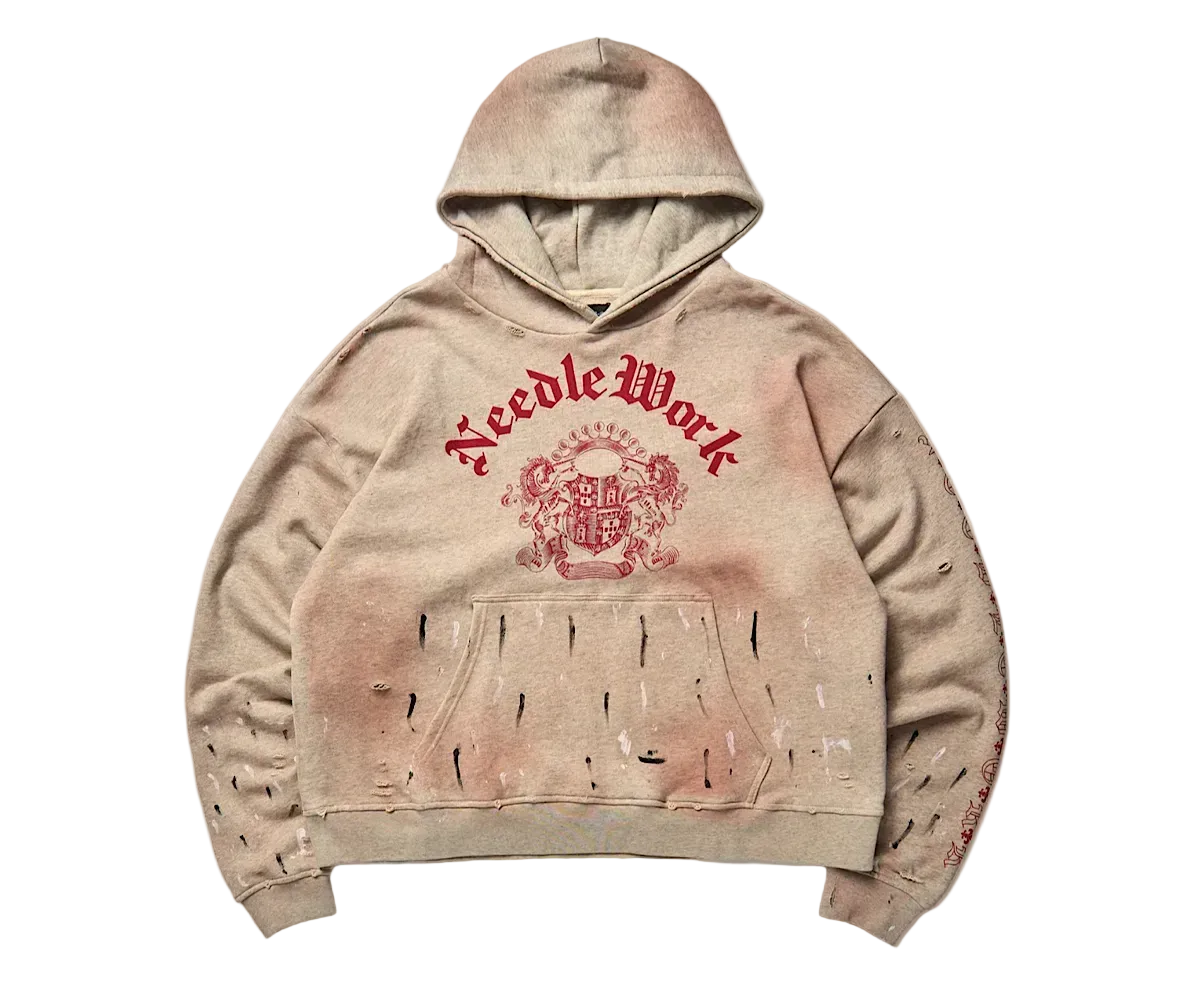
Joggers live or die on recovery. Our Artifact Jogger is made from 440 GSM fabric, as listed in its product description.
Tees are where collar quality matters most. The Money Talks Tee is crafted from 100% organic cotton at 240 gsm, as listed in its product description.
Build a Long Lasting Apparel Wardrobe at Needlework
Building a long lasting apparel wardrobe is a discipline, not a shopping spree. Buy fewer pieces, verify construction before you commit, choose versatile colours and cuts, and care for what you own.
This is the approach we take at Needlework. If you are ready to start, browse the Heirloom Zip Up for a durable layer, then add the matching Heirloom Jogger to build a set that works hard and lasts.
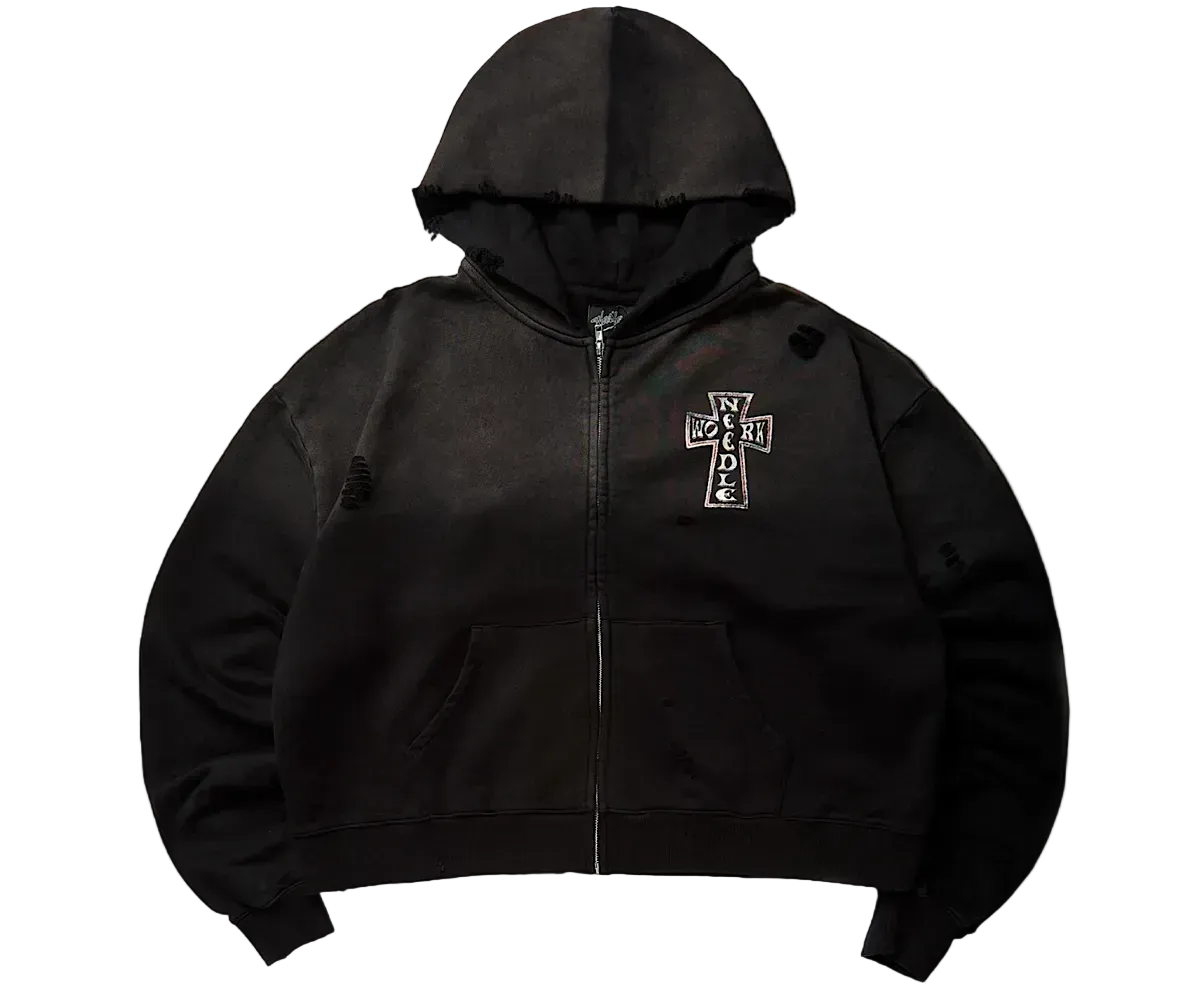
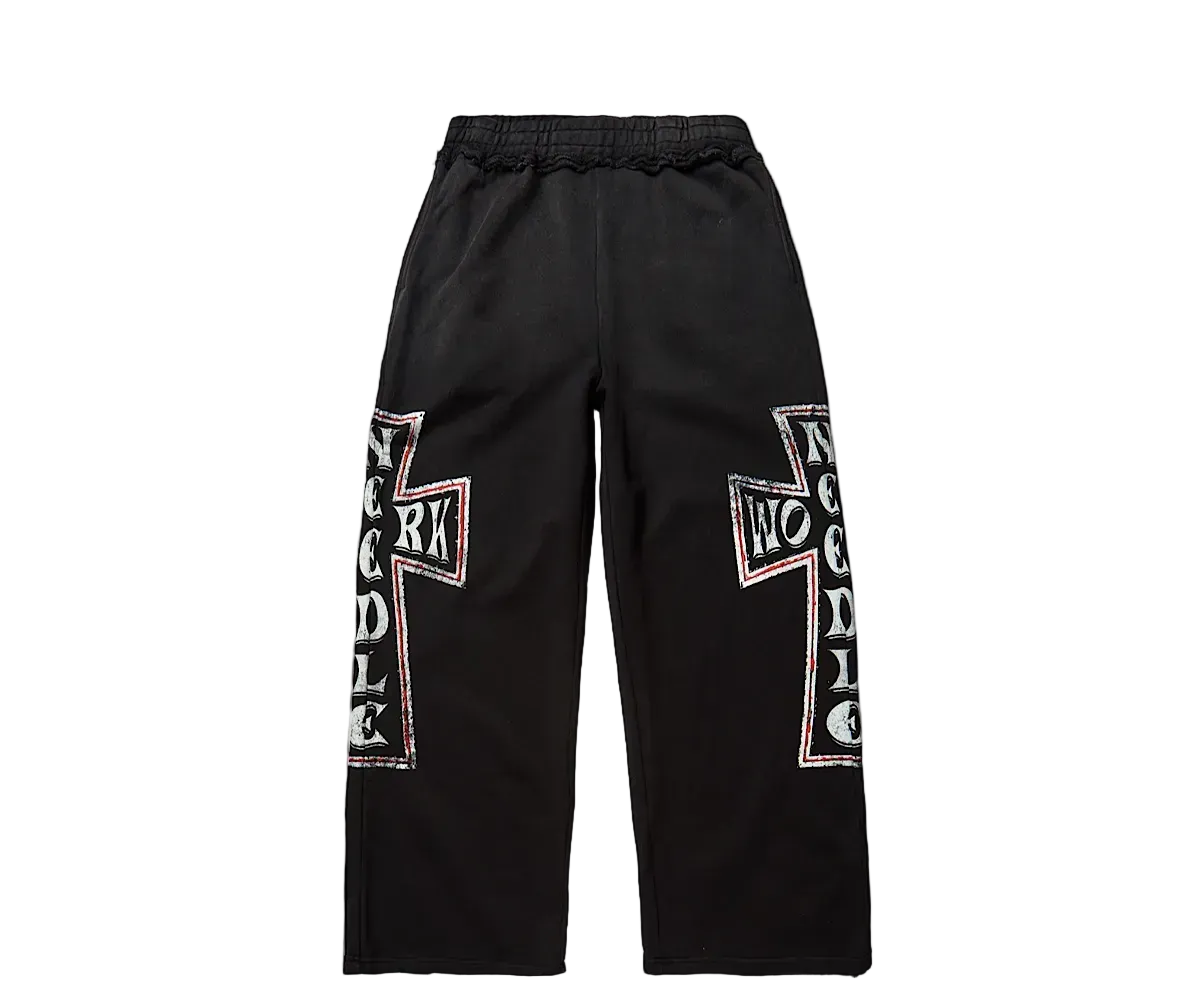
The challenge is not finding clothes; it is finding clothes worth keeping. Start with one piece, run the checklist, and let cost per wear settle the rest.
Frequently Asked Questions
What should I look for when buying clothes that will last?
Start with four checks: fabric weight and fiber composition, seam strength, stitch density, and whether the garment recovers its shape after stretching. A heavyweight fleece, for example, holds structure better than a thin knit. Turn the garment inside out and look for reinforced seams, double-needle stitching at cuffs and hems, and clean seam finishing. Then read the care label, because a garment you can wash cold and hang dry will outlast one that needs dry cleaning after every wear.
Which fabrics are best for durable everyday clothing?
Dense cotton, wool, linen blends and heavyweight fleece resist wear better than loose, thin knits. On the synthetic side, a small share of elastane helps shape retention, while fully synthetic fabrics can pill and trap odour. Check fiber composition on the label and feel the fabric weight in your hand: a 440 GSM fleece feels substantial and holds its shape, while the Money Talks Tee is 240 gsm organic cotton. Match the fabric to the job rather than chasing one universal best.
How can you tell if a garment is well made?
Use the tug test: grip the fabric at a seam and pull gently in both directions. A well-made seam stays flat and the stitches do not gape. Check stitch density, look for loose threads, and inspect buttons, zippers and drawcord tips for secure attachment. Zippers should glide without catching, and hardware should feel solid rather than hollow. Finishing details like matched patterns, straight hems and clean seam finishing separate careful construction from rushed production.
How should I care for clothes to make them last longer?
Wash cold, sort by color to prevent bleeding, and turn garments inside out before washing. Use a gentle cycle and skip the dryer when you can: air drying protects elastic fibers and reduces pilling and fading. Wash less often than you think you need to, and spot clean between washes. Repair small issues early, such as a loose button or a pulled thread, before they become seam failures. A care label is a floor, not a ceiling, so treat it as minimum guidance.
Is expensive clothing worth the price?
Price alone does not guarantee quality, but cost per wear clothing maths makes the comparison clearer. Divide the price by the number of times you expect to wear a piece. The calculation only works if the garment is genuinely well made, so inspect fabric, seams and construction before you spend.
What is the 3-3-3 rule for clothing?
The 3-3-3 rule is a wardrobe planning guideline: buy pieces you can wear for three months, three seasons or three years, depending on the version you follow. The point is to test whether a garment earns its place in regular rotation. It pairs well with a cost per wear calculation, because a piece that survives three years of everyday wear almost always beats a cheaper trend item on long-term value.
